What is this service?
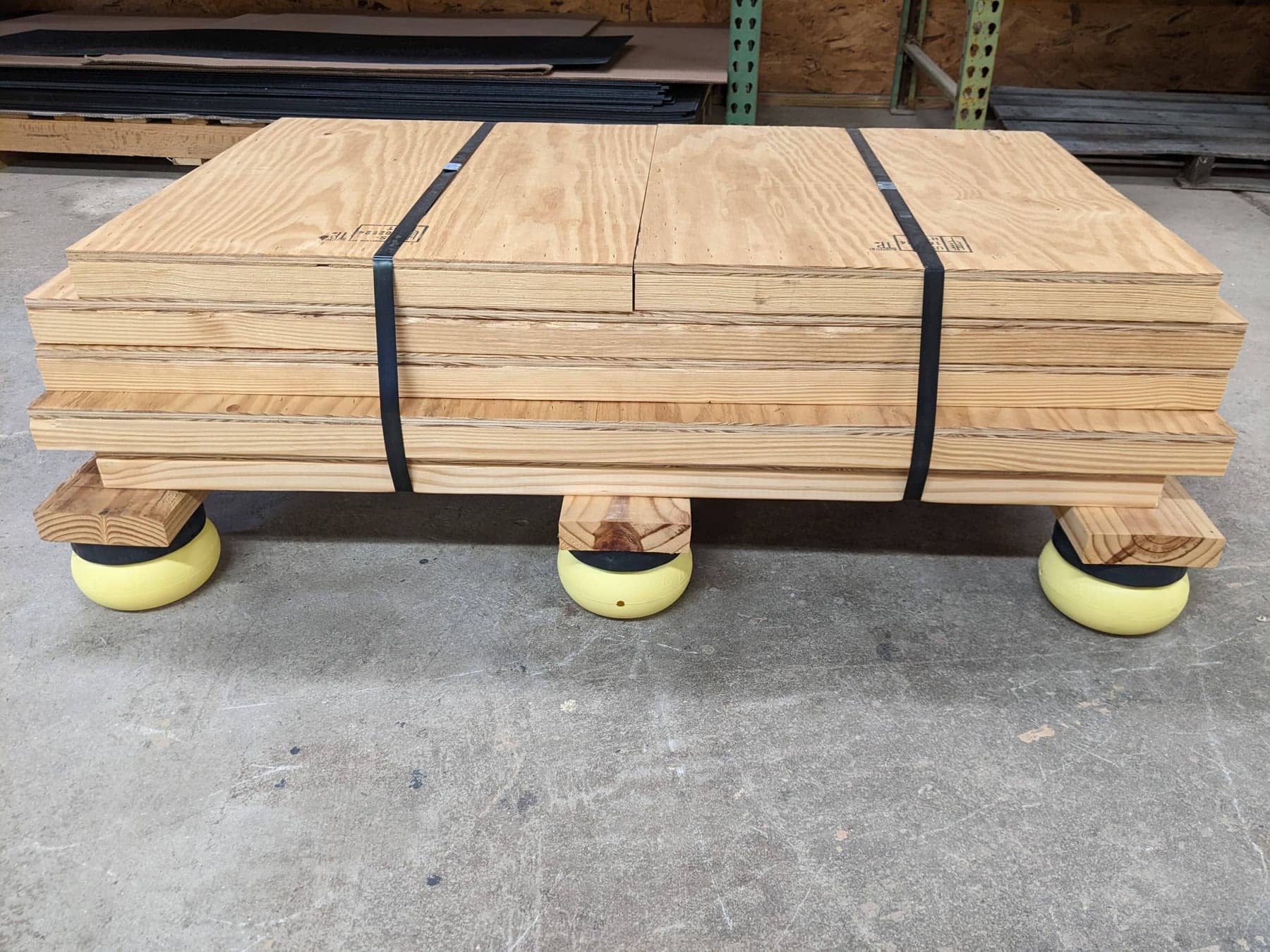
Dunnage is the general name for support and filling materials — dunnage bags, timber boards and bracing, paper honeycomb, foam and anti-slip mats — used to stop cargo moving, being crushed or touching moisture in transit. The right dunnage turns the load into one tight block inside the transport unit.
Who and which cargo is it for?
- Tightening palletised cargo inside containers
- Mixed loads of different package sizes
- Containers with a gap at the door end
- Transport units with limited lashing-point capacity
Scope of service
- Choosing dunnage type by gap size
- Positioning and inflating dunnage bags at the right pressure
- Building timber bracing, barriers and chocks
- Applying anti-slip mats and separator layers
- Protecting cargo surfaces where dunnage makes contact
Typical operation stages
- 1
Gap mapping
Position and width of the gaps the load plan will leave are identified.
- 2
Material choice
Dunnage bags, timber or paper fill are chosen by gap size and cargo type.
- 3
Placement
Dunnage bears on the strongest faces of the cargo and over the full height.
- 4
Tightening
Bags are inflated to the correct pressure; timber barriers are fixed.
- 5
Check
The door end and last row are checked separately and photographed.
Methods and materials
Dunnage bags
Inflatable bags with paper or woven-PP outer layers, effective within a set gap range and only with full contact on the cargo face.
Timber bracing & barriers
For wide gaps and the door end. Solid timber in international shipments is subject to ISPM 15.
Paper honeycomb & foam
For light cargo with sensitive surfaces; can be affected by moisture.
Anti-slip mats
Raise friction between cargo and floor and reduce lashing needs.
Safety and checkpoints
- Over-inflated bags can damage the container wall or the cargo; manufacturer values apply.
- Dunnage bags are never used against the doors.
- A protective layer prevents punctures on sharp-edged cargo.
- Timber dunnage is checked to be dry and to carry the ISPM 15 mark.
Example scenario
Example scenario (illustrative): a 20-pallet load leaves a gap of about 30 cm in the middle of the container and 80 cm at the door end. The middle gap is closed with a suitably sized dunnage bag and the door end with a timber barrier.
Locations served
Our İzmit / Kocaeli based team works at ports and industrial sites around Kocaeli and the Gulf of İzmit. For operations outside Kocaeli, state the location in your request.
Frequently asked questions
Should I use dunnage bags or timber?
Bags are fast and effective within their gap range. Very wide gaps, the door end and heavy point loads are better served by timber bracing. Most loads use both.
Can dunnage replace lashing?
For light, tightly stowed cargo dunnage alone can be enough. For heavy items it complements lashing and blocking.
Does dunnage travel with the cargo?
Yes — which is why solid-timber dunnage must be ISPM 15 compliant and marked.