What is this service?
Project cargo lashing is securing heavy and out-of-gauge units on flat racks, platforms, trailers or in a ship's hold or deck, taking account of centre of gravity, lashing-point capacity, transport accelerations and the strength of the cargo's surfaces. The work usually follows a written method statement approved by the carrier.
Who and which cargo is it for?
- Equipment for energy, petrochemical and infrastructure projects
- Steel modules and large welded fabrications
- Machine tools, presses and production-line machinery that cannot be palletised
- Tracked and wheeled construction machinery
Scope of service
- Review of drawings, centre of gravity and lifting/lashing point data
- Fit assessment against the transport unit or vessel space
- Proposed securing arrangement, equipment type and quantities
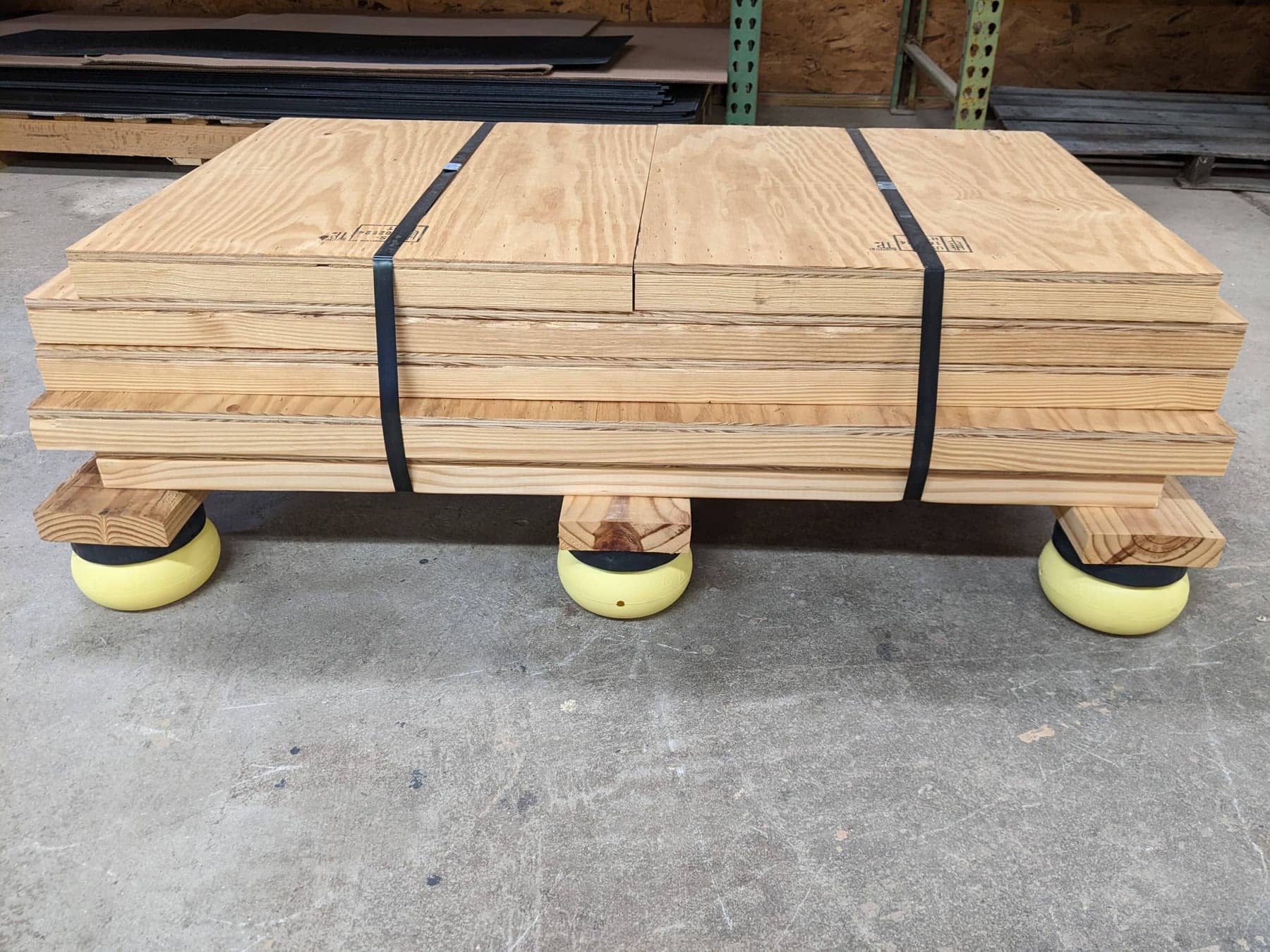
- Timber cradles, chocks and anti-slip material
- Application and preparation for carrier or surveyor inspection
- Pre-departure and, where needed, interim checks
Typical operation stages
- 1
Technical data
We obtain drawings, centre of gravity and permitted lashing points from the manufacturer.
- 2
Method
The securing layout and equipment ratings are set out in a written method statement.
- 3
Approval
The method is shared with the carrier, forwarder and an independent surveyor where required.
- 4
Preparation
Cradles, chocks, anti-slip material and edge protection are prepared on site.
- 5
Application
The unit is positioned, blocked and lashed with even tension.
- 6
Handover
A photo record and equipment list are handed over.
Methods and materials
Timber cradles & chocks
So cylindrical or irregular bases sit safely and spread the load.
Chains & tensioners
High-capacity chains and binders for heavy units, with the rating label and locking device checked.
Steel wire rope
Correctly sized rope with enough wire-rope clips fitted the right way round — wrongly fitted clips greatly reduce capacity.
Welded stoppers
Only where the carrier permits and under a hot-work permit.
Safety and checkpoints
- Nobody stands under the load or in its swing radius during lifting; crane work follows port/terminal rules.
- Lifting lugs are not used as lashing points without the manufacturer's approval.
- Where welding is needed, a hot-work permit, a fire watch and the vessel's consent are required.
- Where calculations are needed, the quote states who performs them and who is responsible.
Example scenario
Example scenario (illustrative): a 6.5-metre cylindrical pressure vessel is to ship on a flat rack. The centre of gravity and permitted lashing points come from the manufacturer's drawing; the vessel sits in two timber cradles profiled to its diameter, on anti-slip material, and is secured with chains in four directions.
Locations served
Our İzmit / Kocaeli based team works at ports and industrial sites around Kocaeli and the Gulf of İzmit. For operations outside Kocaeli, state the location in your request.
Frequently asked questions
Do you carry out calculations for project cargo?
The scope of any calculation and who performs it — ZG LASHING, the carrier or an independent engineer — is agreed in writing at quotation stage. A job that needs a calculation is not carried out without one.
What should I prepare?
A general arrangement drawing, gross weight, centre of gravity position, lifting and lashing points, sensitive surfaces and transport unit or vessel details.
What is used instead of a container for out-of-gauge cargo?
Depending on size: flat racks, platforms, open-top containers or breakbulk stowage in the hold or on deck. The choice is made with the carrier and forwarder.